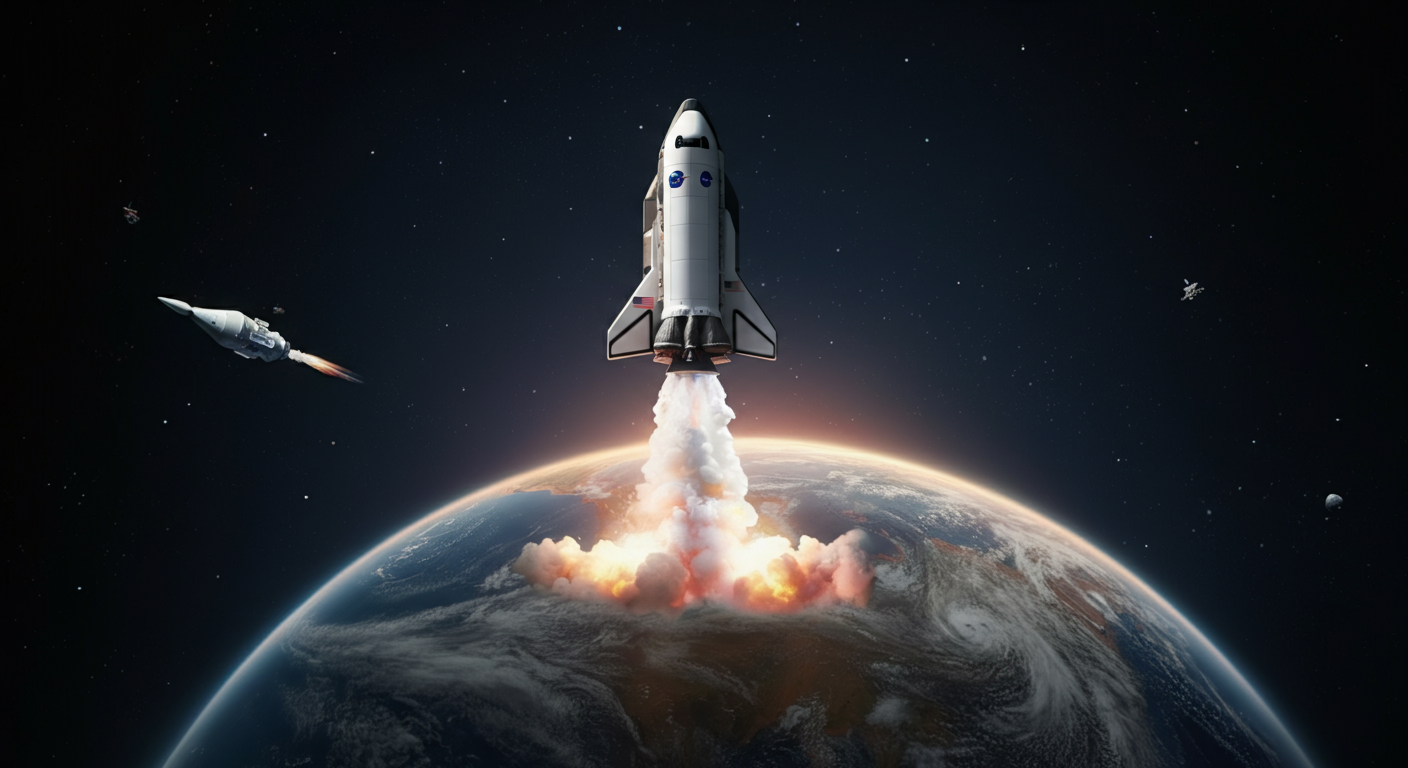
Artemis II is no longer a flight test; it is a high-stakes stress test for the viability of the Space Launch System (SLS) as a sustainable platform. The recurring helium flow issues that forced the rocket’s return to the Vehicle Assembly Building (VAB) reveal a systemic fragility in the hardware that contradicts NASA’s “aggressive” scheduling. This delay isn’t just a technical hiccup; it is a strategic bottleneck that threatens the momentum of the entire Artemis Accords framework. While the hardware returns to the hangar, the geopolitical window for lunar dominance is narrowing, shifting the mission’s primary objective from lunar orbit to institutional survival.
Deconstructing Artemis II: Beyond the Technical Milestones
The transition from the uncrewed Artemis I to the crewed Artemis II represents a fundamental shift in risk tolerance. For the first time in fifty years, NASA is moving from machine-centric data collection to human-centric life support accountability. The core objective is not the Moon itself, but the validation of the Orion spacecraft’s environmental control and life support systems (ECLSS) under deep-space radiation. Unlike the International Space Station, which sits within Earth’s protective magnetosphere, Artemis II places humans in a “fail-deadly” environment where the margin for error is zero. This mission serves as the ultimate gatekeeper: if the Orion cannot maintain atmospheric integrity during the 10-day high-Earth orbit and lunar flyby, the lunar landing architecture for Artemis III becomes a theoretical exercise rather than a flight plan.
The March Launch Window: Assessing NASA’s Readiness and Engineering Risks
The “early March” launch target has effectively transitioned from a technical goal to a psychological one. The return of the SLS rocket to the hangar for repairs signals that the “wet dress rehearsal” identified vulnerabilities that cannot be patched on the pad. Specifically, the helium flow issue is a critical failure point; helium is used to pressurize fuel tanks and actuate valves. A failure here is not just a delay—it is a potential loss of vehicle. By pulling the stack back to the VAB, NASA is prioritizing long-term mission integrity over short-term political optics. However, this impact on the March launch window creates a cascading delay for the entire lunar timeline, as the logistical window for deep-space trajectories is governed by celestial mechanics, not engineering schedules.
The Trend Radar Analysis: Geopolitical Stakes and the New Lunar Economy
The success of Artemis II is the primary currency of the Artemis Accords. International partners, including the Canadian Space Agency, have tied their national space ambitions to this specific mission. Every month of delay provides a strategic opening for the China-led International Lunar Research Station (ILRS) to court unaligned nations. Furthermore, the private sector—ranging from lunar lander developers to resource prospectors—views Artemis II as the “green light” for capital expenditure. If the SLS platform continues to struggle with legacy-style hardware failures, we will likely see a rapid pivot in private investment toward more agile, next-generation heavy-lift providers, potentially sidelining traditional aerospace contractors who have struggled with the SLS’s “single-use” cost model.
From Orbit to Surface: The Strategic Path Toward Artemis III
Artemis II is the blueprint for the Artemis III landing. The data gathered during the Orion’s lunar flyby will determine the final specifications for the Human Landing System (HLS). Without the “man-in-the-loop” data from this mission, NASA cannot certify the docking procedures or the high-bandwidth communication arrays required for a South Pole landing. The roll-back of the Moon rocket is a sobering reminder that the path to the surface is paved with engineering discipline, not just ambition. The strategic value of Artemis II lies in its ability to prove that NASA can still operate in the “deep-space” regime, a capability that has atrophied since the 1970s.
Behind the Scenes: The Economic Friction of Legacy Hardware
The hidden dimension of the Artemis II delay is the soaring cost of “standing army” labor. Every day the SLS sits in the VAB, NASA incurs millions in operational costs without a single second of flight data. This economic friction is the greatest threat to the program. While the public focuses on the “helium issue,” the real story is the tension between the fixed-cost culture of legacy aerospace and the rapid-iteration demands of the modern space race. If Artemis II does not fly by mid-2025, the budgetary pressure from Congress may force a radical restructuring of the mission architecture, potentially favoring commercial alternatives over the SLS entirely.
Counter-Opinion: The Myth of the “Aggressive” Timeline
Critics often argue that NASA is moving too slowly, but a counter-analysis suggests that the “early March” target was never technically feasible. By setting an unrealistic timeline, NASA creates a cycle of “failure” in the public eye when delays inevitably occur. A more robust strategy would have been to decouple the mission from specific months and instead focus on “milestone-based” readiness. The current narrative of “pushed back again” obscures the reality that these are first-of-their-kind engineering hurdles. The obsession with the calendar is a political artifact that may actually be hindering technical progress by forcing rushed rehearsals.
Bold Prediction: The 2025 Pivot
Based on current hardware repair cycles and the 24-month minimum gap required between Artemis II and III, a crewed lunar landing will not occur before 2028. Within the next six months, expect NASA to officially “re-baseline” the Artemis III mission, likely separating the Orion flight test from the actual HLS landing attempt to preserve the appearance of progress. The helium issue found this week is the catalyst that will finally force a realistic, multi-year extension of the lunar timeline.
Frequently Asked Questions
When is the Artemis II mission currently scheduled to launch?
NASA has officially targeted September 2025 for the Artemis II launch following strategic adjustments to the mission timeline. We are monitoring the integration of the Orion spacecraft and the SLS rocket as technical milestones are met to ensure crew safety.
Why did NASA push back the Artemis II launch timeline from its original 2024 date?
We found that the delays were primarily driven by the need to resolve technical issues with the Orion capsule’s heat shield and life support systems. These adjustments allow our engineering teams to prioritize crew safety and ensure all hardware can withstand the rigors of a crewed lunar flyby.
How does the Artemis II flight path differ from the previous Artemis I mission?
Unlike the uncrewed Artemis I, this mission will carry four astronauts on a “hybrid free-return trajectory” around the Moon. We anticipate this mission will serve as the final validation of the Orion spacecraft’s manual handling and life-support capabilities before a lunar landing is attempted.
What are the primary strategic objectives for the Artemis II crew during their 10-day mission?
The crew will focus on testing the proximity operations of the Orion spacecraft and verifying the communications systems in deep space. We believe these tests are vital for establishing the operational baseline required for the subsequent Artemis III landing mission.
What happens if there are further delays to the Artemis II launch window?
If we encounter additional technical hurdles, the launch window would likely shift in monthly increments based on lunar alignment and orbital mechanics. Such delays would naturally impact the Artemis III landing schedule, which is currently slated for late 2026.
Conclusion
We believe that while the recurring technical delays for Artemis II are a setback for the lunar timeline, prioritizing safety and rigorous hardware testing is the only viable path forward. We remain confident that resolving these helium and structural issues now will ultimately ensure the success of NASA’s return to crewed deep-space missions.
References
- NASA (Facebook) — Official update regarding the rollout of the Artemis II moon rocket.
- Engadget — Report on the Artemis II launch delay caused by a helium system issue.
- Space.com — Analysis of technical problems impacting the scheduled March launch window.
- Canadian Space Agency (Facebook) — Information on the Space Launch System rocket and Orion spacecraft rollout.
- LA Times — Coverage of NASA’s decision to return the rocket to the hangar for additional repairs.
Report Inaccuracy
We value accuracy. If you find any inaccurate information, please let us know.