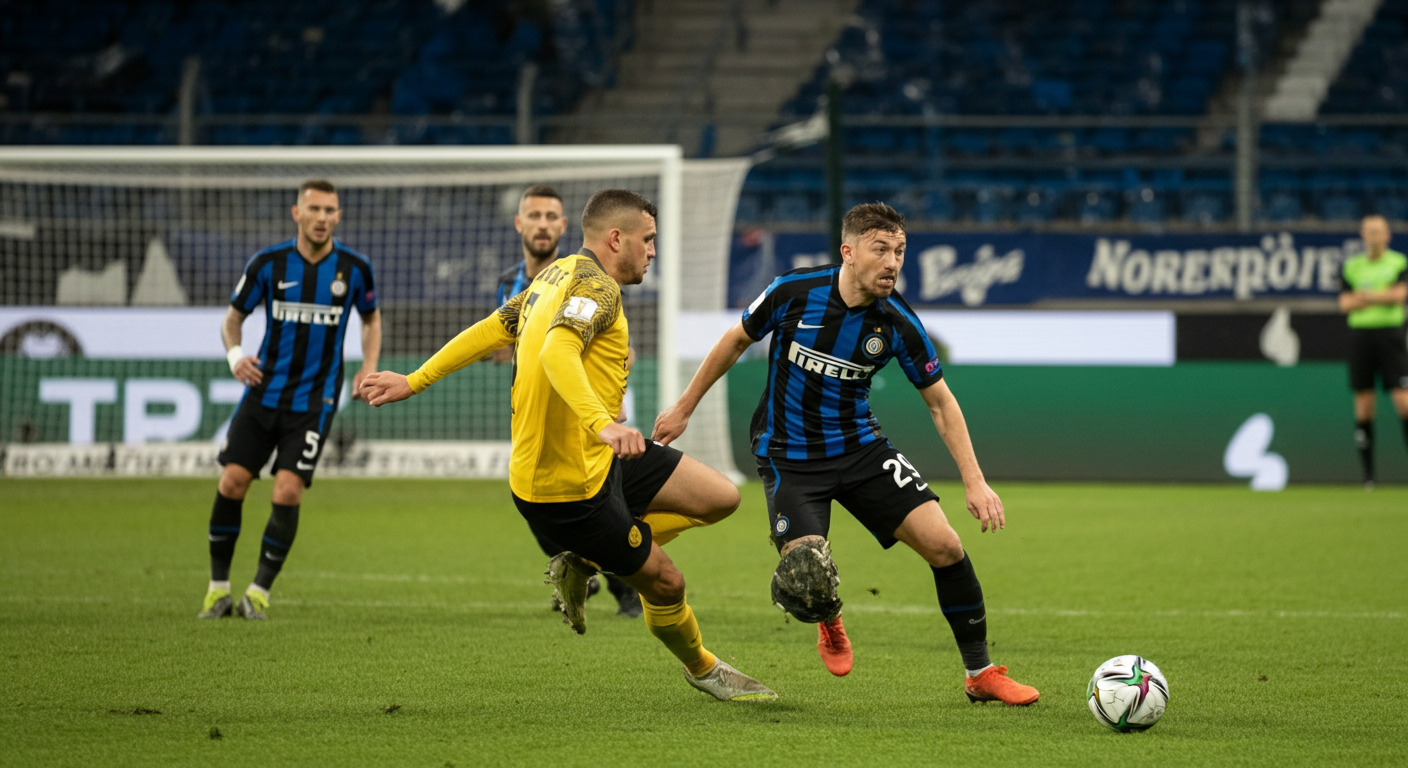
Inter Milan’s exit from the Champions League at the hands of Bodø/Glimt is not a sporting anomaly; it is a structural indictment of the tactical rigidity currently paralyzing Europe’s traditional elite. While the 2-1 scoreline at the San Siro suggests a narrow margin, the underlying mechanics reveal a systemic failure. Bodø/Glimt’s progression proves that tactical automation and high-velocity pressing can now consistently dismantle “superior” technical rosters that rely on individual brilliance rather than collective cohesion.
1. The Anatomy of an Upset: Bodø/Glimt’s Strategic Evolution
The success of the Norwegian side is rooted in a decade-long commitment to a specific identity—the “Glimt-model”—which prioritizes verticality and extreme physical conditioning. Unlike Inter, who often adapt their shape to neutralize opponents, Bodø/Glimt forces the opponent to adapt to them. This cultural stability allowed them to walk into the San Siro and dictate the tempo, a feat rarely seen by clubs with a fraction of the Serie A giant’s budget. Their victory, as noted in initial reports, is the culmination of a development cycle that values tactical continuity over short-term star acquisitions.
2. High-Press Efficiency: How Inter’s Midfield Was Systematically Neutralized
Inter’s primary failure lay in their inability to escape Bodø/Glimt’s man-oriented pressing triggers. By isolating Inter’s deep-lying playmakers, the Norwegian side forced the 2023 finalists into “low-value” wide areas. Statistics from the match highlight a telling disparity: despite Inter firing 19 shots on goal, as detailed by The Sun, the Expected Goals (xG) per shot remained remarkably low. Bodø/Glimt’s positional rotations ensured that Inter’s midfield was constantly back-pedaling, preventing the Italian side from establishing the sustained pressure required to overturn the first-leg deficit.
3. Resource Allocation vs. Performance: The Disparity of the Modern UCL
The financial chasm between these two clubs should, in theory, preclude such a result. However, the modern Champions League is witnessing a diminishing return on squad valuation. Inter’s high-wage veterans struggled against the “labor-intensive” football of a younger, hungrier Glimt squad. This result, which saw Inter crash out despite their domestic dominance, suggests that “capital-intensive” teams are increasingly vulnerable to “process-driven” teams that maximize every ounce of their limited resources.
4. Trend Radar Analysis: Is the Era of the “Untouchable Giant” Ending?
We are entering an era of tactical parity. Data-driven scouting and the democratization of elite coaching methodologies mean that mid-tier clubs can now replicate the high-intensity systems of Liverpool or Manchester City. When a giant like Inter operates at 85% efficiency, they are no longer safe from a club like Bodø/Glimt operating at 100%. The “untouchable” status of the European elite is dissolving as knockout football becomes a test of system durability rather than just a showcase of expensive talent. As Times of Malta correctly identifies, this is a “fairy tale” only to those ignoring the tactical evolution happening in the North.
Behind the Scenes: The Economic Fallout
For Inter Milan, this is a financial catastrophe. The club’s business model is heavily reliant on deep Champions League runs to service debt and maintain their wage bill. This early exit, confirmed by social media reports across the globe, will likely force the sale of at least one marquee player this summer. The “Glimt Effect” has effectively triggered a budgetary crisis in Milan.
Counter-Opinion: Luck or Logic?
Critics argue that Inter’s 19 shots suggest they were merely unlucky. However, a deeper dive into shot quality reveals that most were desperate attempts from outside the box or contested headers. Bodø/Glimt didn’t get lucky; they successfully “solved” Inter’s offensive patterns. The narrative of the “unlucky giant” is a shield used to protect failing tactical structures from necessary scrutiny.
Bold Prediction
Within the next six months, Bodø/Glimt will see their head coach or at least three key starters poached by top-five league clubs for record fees. Inter Milan will pivot away from their current tactical setup, likely replacing aging wing-backs with high-intensity “marathon” players to bridge the physical gap exposed in this tie. The Norwegian side will reach the Quarter-Finals, proving that their system is the new blueprint for mid-market success.
Frequently Asked Questions
How did Bodø/Glimt’s high press disrupt Inter’s build-up from the back?
We observed that Bodø/Glimt used a man-oriented press that forced Inter’s ball-playing defenders into hurried long balls, bypassing their creative midfield. By cutting off the passing lanes to the pivot, they effectively neutralized Inter’s ability to transition smoothly into the final third.
Why does Inter’s 3-5-2 system struggle against high-intensity vertical teams?
We found that the 3-5-2 often leaves gaps in the half-spaces when the wing-backs are caught high up the pitch during a turnover. Teams like Bodø/Glimt exploit these pockets of space with rapid vertical transitions before Inter’s back three can reorganize.
What role did the artificial pitch play in exposing these tactical flaws?
While conditions were a factor, we believe the primary issue was Inter’s lack of adaptability to the speed of play on the synthetic surface. The faster ball movement highlighted Inter’s slow defensive rotations, making their tactical rigidness more apparent than in typical domestic matches.
Can Inter’s tactical vulnerabilities be fixed without changing their core formation?
We suggest that Inter doesn’t necessarily need a formation change, but rather better defensive coverage from the central midfielders when wing-backs push forward. Implementing a more flexible “rest defense” would help prevent the counter-attacking vulnerabilities exposed in this specific matchup.
Which specific areas of the pitch did Bodø/Glimt target most effectively?
We noted that the Norwegian side focused heavily on the channels behind Inter’s wide center-backs. By dragging the defenders out of the central block, they created massive gaps for late-running midfielders to exploit, a tactic Inter struggled to track throughout the game.
Conclusion
We believe that Bodø/Glimt’s historic victory serves as a stark reminder that tactical innovation and high-intensity pressing can dismantle even the most established European giants. This result exposes deep-seated vulnerabilities in Inter Milan’s defensive transition, suggesting that the Italian side must undergo significant tactical adjustments to remain competitive at the highest level.
References
- Yahoo Sports — Live coverage of Bodø/Glimt knocking Inter Milan out of the Champions League.
- Flashscore — Detailed match report on the stunning upset in the UEFA Champions League.
- Plaantik — Social media analysis of the finalists’ exit from the competition.
- The Sun — Report on Inter Milan crashing out of the tournament against the Norwegian side.
- Times of Malta — Commentary on the continuation of Bodø/Glimt’s fairy tale run in Europe.
Report Inaccuracy
We value accuracy. If you find any inaccurate information, please let us know.