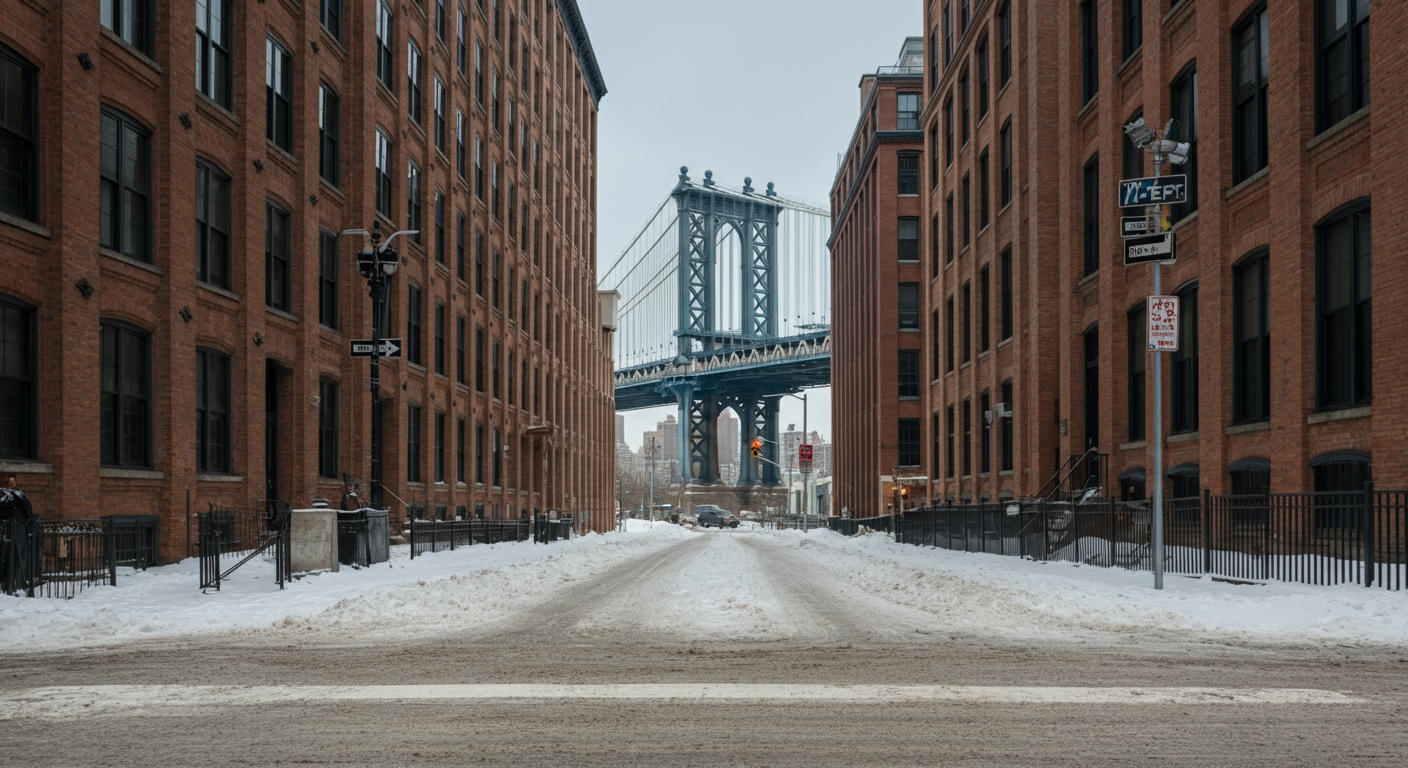
NYC’s Storm Curfew: The Rise of the Pre-emptive Urban Lockdown
New York City is pivoting from managing disasters to managing human behavior as its primary containment strategy. By implementing a mandatory curfew and a total ban on non-essential travel before the peak of the “bomb cyclone,” the administration is treating meteorological events as security threats rather than logistical inconveniences. This shift signals the birth of the “Zero-Tolerance City,” where the economic and social cost of a total shutdown is now considered more acceptable than the political liability of a single stranded commuter. The curfew isn’t just a safety measure; it is a stress test for the militarization of climate response in megacities.
The Logistics of a Lockdown: Deconstructing NYC’s Emergency Protocol
The operational framework behind Mayor Zohran Mamdani’s decision rests on a streamlined legal trigger: the preemptive State of Emergency. Unlike previous administrations that waited for snow accumulation to reach critical thresholds, the current protocol prioritizes “pathway clearance.” By prohibiting non-essential vehicles, the city effectively nationalizes the streets for emergency and utility use. This de facto lockdown relies on the rapid deployment of resources to shelters and the immediate closure of the public school system, turning a municipal bureaucracy into a command-and-control hierarchy within hours.
Economic and Social Ripple Effects of Urban Curfews
NYC’s identity as a 24-hour economy makes a curfew a high-stakes gamble. The immediate victims are not just retail businesses, but the “invisible” logistics layer: gig workers, delivery drivers, and night-shift essential staff. When the city imposes a circulation ban, it creates a supply chain fracture that lasts 48–72 hours beyond the storm itself. The social friction is equally significant; a curfew in a city of eight million people creates a “compliance vacuum” in high-density neighborhoods, where the enforcement of movement restrictions often clashes with the reality of overcrowded housing and the necessity of local transit.
Trend Radar Analysis: The Shift Toward Proactive Urban Governance
We are witnessing the institutionalization of “Climate Pre-emption.” Megacities are moving away from reactive recovery (cleaning up after the storm) toward proactive paralysis (stopping the city to prevent the mess). This governance model assumes that the public cannot be trusted to navigate volatility. By imposing a curfew on a population of eight million, the city sets a precedent: total control is the only viable mitigation strategy for climate-driven volatility. This signals a permanent change where “safety” serves as the ultimate justification for suspending urban life.
Precedent and Performance: Comparing NYC’s Response to Historical Storms
Historical data from past blizzards suggests that “wait-and-see” approaches led to catastrophic vehicle abandonment and delayed emergency response. However, the aggressive preventative measures seen in this “bomb cyclone” response represent a radical departure from the Bloomberg or de Blasio eras. While the safety outcome—fewer accidents—is quantifiable, the performance metric for the city is now “zero incidents.” This binary of success or failure forces mayors into increasingly restrictive stances to avoid the political fallout of a single high-profile tragedy.
Behind the Scenes
The political dimension of this curfew is as much about optics as it is about meteorology. A new administration often uses its first major weather event to project “strength” and “decisiveness.” By over-preparing, the Mayor effectively shifts the blame from the city’s infrastructure to the individual’s compliance. If the storm underperforms, the administration claims the curfew prevented a disaster; if the storm is severe, they claim the curfew saved lives. It is a win-win political architecture built on the restriction of movement.
Counter-Opinion
The “bomb cyclone” narrative may be masking a growing infrastructure fragility. The city’s reliance on curfews suggests that the transit and power systems are no longer resilient enough to handle even standard winter volatility. Instead of investing in “all-weather” infrastructure, the city is investing in “all-stop” policy. There is a risk that “curfew fatigue” will set in, leading to mass non-compliance during future events that are actually life-threatening.
Bold Prediction
Within the next six months, “Weather Curfews” will transition from emergency measures to standardized administrative tools across major global hubs. We will see the introduction of “Climate Alert Levels” that automatically trigger movement restrictions via smartphone alerts, bypassing traditional legislative debate and making urban lockdowns a routine feature of the 21st-century winter.
Frequently Asked Questions
Who is considered an essential worker exempt from the NYC storm curfew?
We define essential workers as healthcare professionals, emergency responders, and utility repair crews who must travel to maintain public safety. Additionally, delivery workers and transit employees are typically granted passage, provided they have valid identification or proof of employment.
What are the legal consequences if we are caught outside during an active curfew?
Violating a storm curfew can result in a summons or a fine, as the measure is legally enforceable under emergency executive orders. We recommend staying indoors to avoid these penalties and to ensure that emergency vehicles have unobstructed access to the roads.
How do we distinguish between a travel advisory and a mandatory storm curfew?
A travel advisory is a strong recommendation to stay off the roads, whereas a curfew is a legal mandate that prohibits non-essential travel during specific hours. We monitor weather severity and infrastructure risks to determine which level of restriction is necessary for public safety.
Will public transportation continue to run while a storm curfew is in effect?
During a curfew, we often see limited or suspended service on the MTA and local bus routes to protect both passengers and transit workers. We advise checking real-time updates through official city channels, as service changes are frequently implemented alongside curfew announcements.
How can we receive immediate notifications about curfew changes or emergency alerts?
We suggest signing up for Notify NYC, the city’s official emergency communications system, to receive text or email alerts in real-time. This ensures you have the most current information regarding start times, expiration periods, and specific zone restrictions.
Conclusion
We believe that while the implementation of a storm curfew in New York City is a drastic measure, it represents a necessary prioritization of public safety over logistical convenience during extreme weather events. In our view, these restrictions are essential for reducing emergency response times and preventing avoidable accidents, provided the government maintains transparency regarding the duration of such controls.
References
- Globovisión — Report on the imposition of the curfew due to the arrival of a powerful storm.
- 2001online — Details regarding the forecast and specific restrictions associated with the NYC curfew.
- El Comercio — Coverage of the mayor’s decision to enforce a curfew ahead of the violent storm.
- Acento — Information on the prohibition of non-essential vehicle circulation in New York.
- Diario Libre — Update on the travel bans for non-essential vehicles during the storm.
Report Inaccuracy
We value accuracy. If you find any inaccurate information, please let us know.