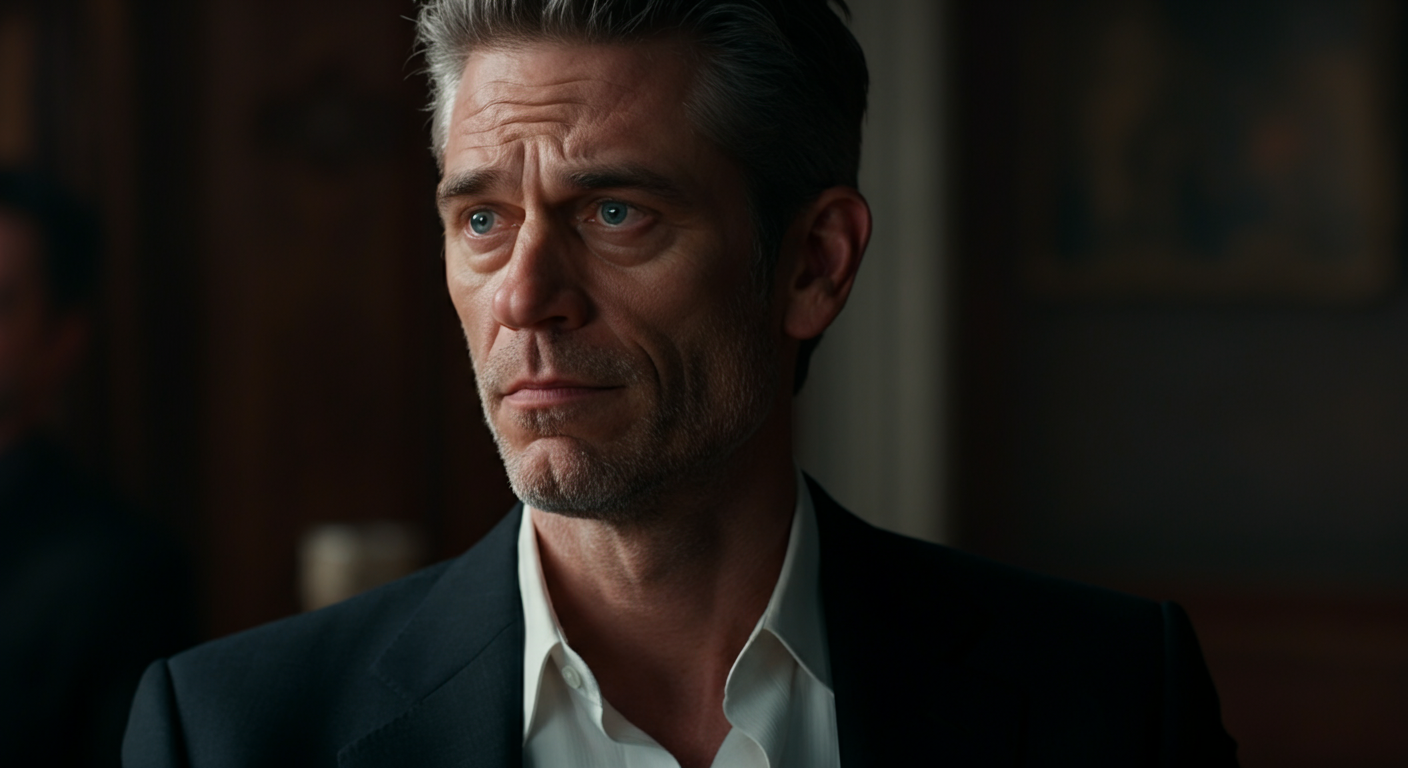
Eric Dane’s career represents the most successful “prestige pivot” in modern television history. While his peers from the mid-2000s procedural era largely remained trapped in the amber of network syndication, Dane leveraged the “McSteamy” archetype not as a career ceiling, but as a psychological foundation for a darker, more complex exploration of masculinity in Euphoria. His 53rd year marks the apex of a rare transition: moving from a character defined by the female gaze to one that deconstructs the male psyche for a cynical Gen Z audience.
The Archetype Shift: Redefining the Rogue
Mark Sloan was more than a plot device for Grey’s Anatomy; he was the prototype for the “vulnerable rogue.” Before Dane, the charming antagonist was typically two-dimensional. Dane introduced a layer of tragic incompetence in personal relationships that humanized the “alpha” surgeon. By blending physical dominance with a desperate need for familial validation, he shifted the “charming rogue” trope from a static character type to a dynamic, evolving arc. This performance paved the way for the “complicated man” era of network TV, proving that audiences would stay loyal to an objectively flawed protagonist if the performance signaled deep-seated insecurity.
Career Trajectory: The Strategic Pivot
Assessing Dane’s trajectory requires looking past the surface of his filmography. The transition from the high-gloss world of Shondaland to the gritty, post-apocalyptic The Last Ship was a tactical move to establish “action-man” credibility. However, his role as Cal Jacobs in Euphoria is the true masterstroke. By playing a character who is essentially the “dark mirror” version of Mark Sloan—a man whose external perfection hides a fractured, repressed identity—Dane effectively weaponized his own legacy. He didn’t run from his past as a heartthrob; he used it to make Cal Jacobs’ secret life more jarring and impactful.
Trend Radar Analysis: The Economic Power of ‘McSteamy’
The ‘McSteamy’ brand functions as a rare multi-generational economic asset. For Disney/ABC, the character remains a primary driver for Grey’s Anatomy streaming numbers among Millennials and Gen X. For Warner Bros. Discovery (Max), Dane’s presence in Euphoria attracts a younger demographic that views him through a lens of “prestige drama” rather than soap opera. This creates a feedback loop: Gen Z “discovers” Dane in Euphoria, then migrates to Grey’s Anatomy for legacy viewing. This cross-platform fluidity makes Dane one of the most bankable television stars in the streaming era, as he carries high “Q-Score” recognition across three distinct decades of viewers.
Digital Longevity: Algorithm Synergy
Dane’s enduring relevance is fueled by “Algorithm Synergy.” On platforms like TikTok and Instagram, the contrast between the idealized Mark Sloan and the terrifying Cal Jacobs creates high-engagement content. This digital footprint isn’t manufactured by a PR team; it is an organic byproduct of his range. He occupies a unique space in the digital zeitgeist as a “legacy icon” who is still actively producing high-quality, meme-able content in the present. His 53rd year finds him at the center of a Venn diagram involving nostalgia, prestige television, and digital relevance.
Behind the Scenes: The Economic Dimension
The economic reality of Dane’s career is tied to the shift from network residuals to the “streaming re-discovery” model. In the old Hollywood system, an actor of Dane’s age might be relegated to “father” roles in sitcoms. In the current landscape, his ability to bridge the gap between network TV and HBO-style “Peak TV” makes him a strategic asset for studios looking to minimize risk. He brings a pre-built audience to every project, significantly lowering the marketing spend required for new series.
Counter-Opinion: The Risk of Typecasting Deconstruction
A prevailing view suggests that Dane’s turn to darker roles is a rejection of his “McSteamy” past. This is an oversimplification. The real risk is not that he will be typecast as a heartthrob, but that he will become typecast as the “repressed patriarch.” While his performance in Euphoria is career-defining, there is a gap in his current portfolio for a high-concept comedic or lighthearted role. Over-indexing on “grit” can be just as limiting as over-indexing on “charm.”
Bold Prediction
Within the next 6 months, Eric Dane will be attached to a major neo-noir or high-stakes psychological thriller film, likely for a major streaming service like Apple TV+ or Netflix. Data suggests his “prestige value” is at an all-time high, and studios will look to capitalize on his ability to play morally grey leads. This move will officially transition him from “TV Icon” to “Leading Film Actor,” a jump that few actors successfully make after the age of 50.
Frequently Asked Questions
Why did Eric Dane leave Grey’s Anatomy?
We found that Eric Dane chose to leave the series to pursue new creative opportunities, most notably the lead role in the action-drama “The Last Ship.” While his departure was a creative decision by the writers to give Mark Sloan a definitive ending, Dane has always maintained a positive relationship with the show’s creators.
How did Eric Dane’s role in Euphoria change his legacy?
We believe his portrayal of Cal Jacobs in “Euphoria” was a turning point that transitioned him from a traditional TV heartthrob to a powerhouse dramatic actor. By taking on such a complex and dark role, he proved his range to a younger generation of viewers and critics alike.
What is Eric Dane’s most recent project?
We have recently seen him starring as the primary antagonist in “Bad Boys: Ride or Die” alongside Will Smith and Martin Lawrence. This role showcases his ability to command the big screen in high-stakes action films even as he celebrates his 53rd year.
Has Eric Dane spoken publicly about his health and sobriety?
Yes, we have noted that Dane has been incredibly transparent about his past struggles with substance abuse and his journey with depression. His openness has been a significant part of his legacy, helping to destigmatize mental health discussions for men in the entertainment industry.
How did the nickname “McSteamy” originate?
We recall that the nickname was first used by the character Izzie Stevens in Season 2 of “Grey’s Anatomy” following his iconic entrance. It was designed as a counterpart to Patrick Dempsey’s “McDreamy” and eventually became a permanent fixture in the pop culture lexicon.
Conclusion
We believe that Eric Dane has successfully transcended his early heartthrob status to become one of the most versatile and respected character actors in modern television. His ability to pivot from the charismatic charm of “McSteamy” to the haunting complexity of Cal Jacobs demonstrates a profound professional evolution that secures his lasting legacy at 53.
References
- IMDb — Comprehensive filmography and career history for Eric Dane.
- Wikipedia — Detailed biography and overview of professional milestones.
- Rotten Tomatoes — Critical reception and ratings for his major television and film roles.
- TV Guide — Profile and complete list of television credits and appearances.
Report Inaccuracy
We value accuracy. If you find any inaccurate information, please let us know.
