Osasuna vs Real Madrid: Why El Sadar is the Tactical Crucible of LaLiga
Real Madrid’s reliance on Fede Valverde as a secondary playmaker from the flank is no longer a tactical luxury; it is a structural necessity to survive the “El Sadar trap.” While Vinicius Jr. often provides the finishing touch, the real strategic shift lies in Carlo Ancelotti’s abandonment of traditional midfield control in favor of vertical chaos. In high-intensity away fixtures, Madrid has evolved into a team that weaponizes the opponent’s aggression against them, using Valverde’s lung-busting runs to bypass a congested midfield entirely.
1. The El Sadar Factor: Analyzing Osasuna’s Defensive Resilience
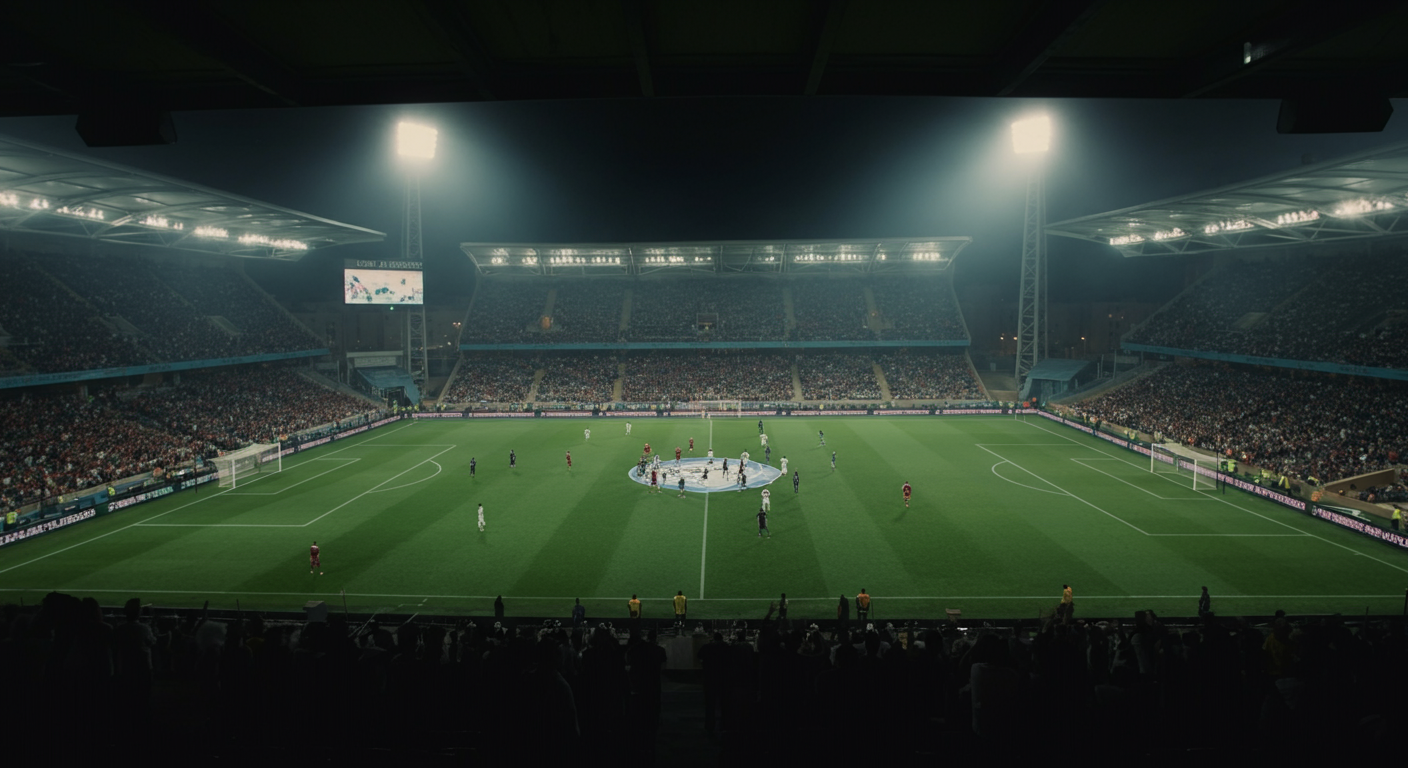
El Sadar operates as a spatial vacuum. The stadium’s architecture and the aggressive proximity of the crowd force elite teams into unforced errors by reducing the “decision-making window.” Osasuna’s defensive structure under pressure is not merely about a low block; it is about “zonal harassment.” They do not wait for the ball to enter their third; they squeeze the pitch vertically, daring Real Madrid’s center-backs to find passing lanes that don’t exist. This claustrophobic environment often disrupts the rhythm of technical players, forcing a physical battle that favors the home side’s grit.
2. Real Madrid’s Tactical Evolution: Navigating Midfield Transitions
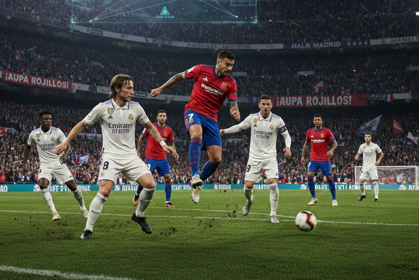
Ancelotti has pivoted from the possession-heavy “Kroos era” to a model built on explosive transitions. The recent interaction between Valverde and Vinicius highlights a specific pattern: Madrid draws the opposition press deep into their own half, only to release Valverde into the “half-space” behind the full-back. This rotation allows Madrid to maintain a defensive shell while remaining lethal on the break, a necessary adjustment for the rigors of Matchday 25 where fatigue begins to compromise tactical discipline.
3. Statistical Deep Dive: Key Metrics Defining the Rivalry
The numbers at El Sadar tell a story of efficiency over dominance. Historical data suggests that Real Madrid often records lower possession percentages here than in their home fixtures, yet their Expected Goals (xG) remains high due to the quality of “big chances” created on the counter. Osasuna’s strategy involves high-volume crossing, often exceeding 20 per match, testing the aerial dominance of Madrid’s backline. The battle is won in the “second ball” recovery rate—whoever controls the rebounds in the edge of the box typically dictates the final score.
4. Strategic Battlegrounds: High Pressing vs. Defensive Depth
The clash is a masterclass in risk management. Osasuna’s high press is a double-edged sword; it can stifle Madrid’s buildup, as seen in the early stages of the match, but it leaves the defense vulnerable to the pace of Vinicius. The strategic pivot occurs when Madrid drops into a deep 4-4-2 block, inviting Osasuna forward. This “elastic” defensive depth is designed to create 40-50 meters of open green grass for Madrid’s attackers to exploit once the turnover is forced.
5. Championship Implications: Projecting the Impact on the LaLiga Title Race
A fixture at El Sadar in late February is a psychological gatekeeper. For the league leaders, securing three points here is less about the table and more about “title momentum.” As the race intensifies, the ability to grind out results in hostile territories separates champions from contenders. A slip-up doesn’t just lose points; it signals a vulnerability that rivals will exploit in the final ten-game sprint.
Behind the Scenes: The Socio-Economic Grudge
Beyond the tactics, this match represents the clash between the “Socio” model of Osasuna—one of the few clubs still owned by its members—and the global commercial juggernaut of Real Madrid. This economic disparity fuels the intensity at El Sadar, where the “David vs. Goliath” narrative is culturally ingrained, making every tackle a statement of identity rather than just a sporting action.
Counter-Opinion: The Myth of Defensive Resilience
While analysts praise Osasuna’s “resilience,” a deeper look suggests they are often beneficiaries of elite teams’ poor finishing rather than their own defensive perfection. When Madrid plays with vertical precision, Osasuna’s high line is frequently exposed. The “resilience” is often a byproduct of a slow tempo; when the game accelerates, the gap in individual quality becomes impossible to bridge with mere “atmosphere.”
Bold Prediction: Within the next 6 months, Real Madrid will fully transition to a “positionless” front three, where the distinction between midfielders and attackers vanishes. This evolution, catalyzed by matches like the one at El Sadar, will make them the most difficult team in Europe to press, as their structural fluidity will render traditional man-marking obsolete.
Frequently Asked Questions
Why is El Sadar considered such a difficult venue for Real Madrid?
We have observed that the compact pitch dimensions and the proximity of the fans create an intimidating atmosphere that disrupts Real Madrid’s expansive passing game. Osasuna leverages this environment to implement a high-intensity press that often forces uncharacteristic errors from elite midfielders.
What tactical setup does Osasuna typically use to stop Vinícius Júnior?
We usually see Osasuna employ a “double-teaming” strategy on the left flank, where the right-back is supported by a tracking winger or a drifting central midfielder. This setup aims to deny Vinícius the space to accelerate into 1v1 situations, forcing him into more congested central areas.
How does Real Madrid adapt their midfield to counter Osasuna’s physicality?
We find that Carlo Ancelotti often prioritizes verticality and quick transitions over slow buildup play in this fixture. By utilizing direct long balls to bypass Osasuna’s aggressive mid-block, Madrid can exploit the space behind the defense before the home side can reorganize their shape.
Are set-pieces a deciding factor in this specific matchup?
Yes, we consider set-pieces a vital tactical component as Osasuna frequently uses their aerial strength to challenge Madrid’s zonal marking. Conversely, Real Madrid often relies on the quality of their deliveries to find breakthroughs when the game becomes deadlocked in open play.
Do historical trends suggest a high-scoring game at El Sadar?
While Real Madrid possesses immense firepower, we’ve noted that matches at El Sadar tend to be more defensive and lower-scoring than those at the Bernabéu. Osasuna’s disciplined structure and focus on narrow defensive lines often result in tight scorelines decided by individual moments of brilliance.
Conclusion
We believe that Real Madrid’s tactical flexibility and individual brilliance, particularly through Vinicius, remain the deciding factors in overcoming Osasuna’s high-pressure system at El Sadar. While the home side consistently proves to be a resilient opponent, our analysis suggests that Madrid’s efficiency in transition continues to define the outcome of this historic rivalry.
References
- MARCA — Live coverage and match highlights of Osasuna vs Real Madrid.
- OkDiario — Real-time updates and goal summaries for the LaLiga fixture.
- RTVE — Comprehensive match summary and results for matchday 25.
- Mundo Deportivo — Detailed live reporting of the LaLiga EA Sports clash.
- La Vanguardia — Play-by-play analysis of the match between Osasuna and Real Madrid.
Report Inaccuracy
We value accuracy. If you find any inaccurate information, please let us know.
