SOTU Optics: Why Democratic Passivity Cedes the Political Narrative
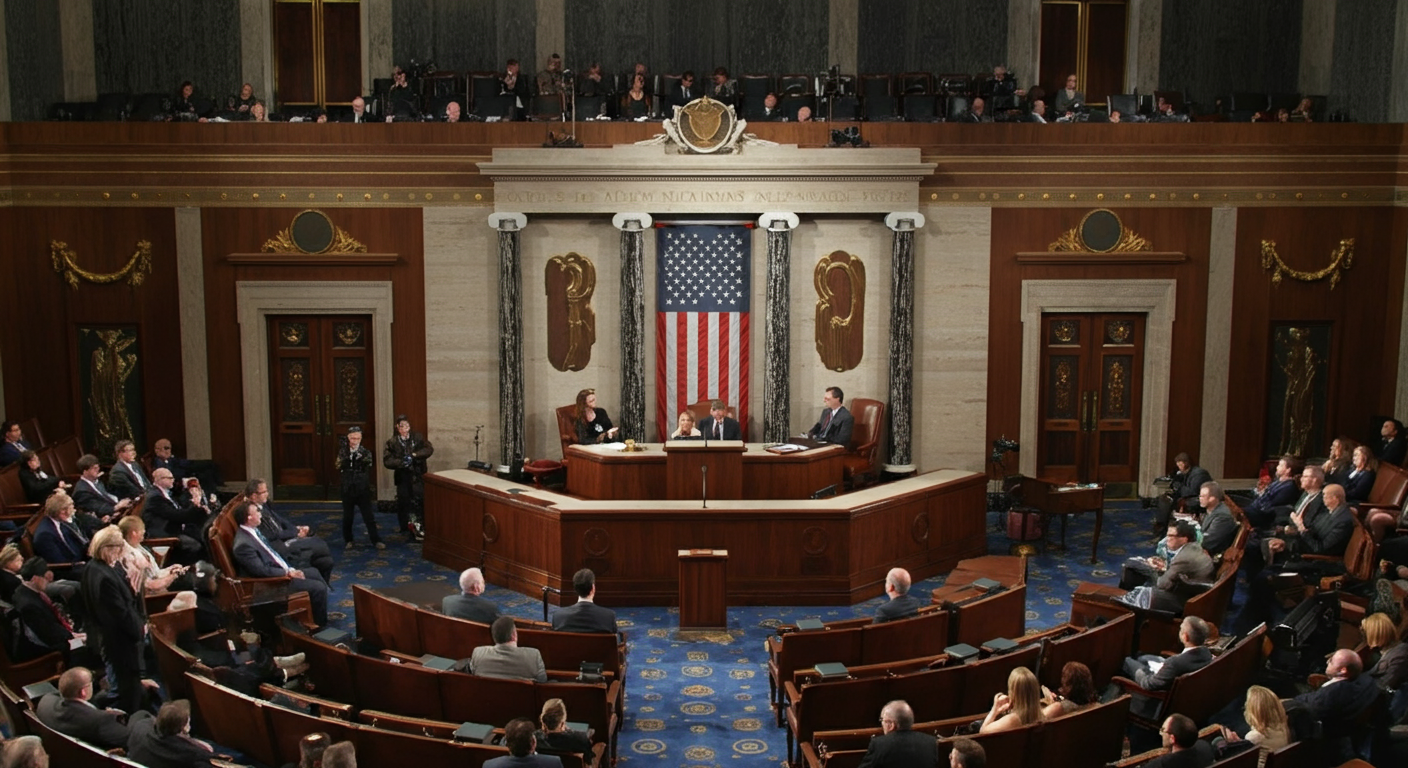
Absence is not an act of protest; it is a surrender of the frame. In the high-velocity visual economy of a State of the Union (SOTU) address, a boycott functions as a “dark spot” that the cameras quickly bypass to focus on the orator’s triumph. By opting for silence or empty seats, opposition members are not “de-normalizing” an administration; they are voluntarily exiting the only 60-minute window where they have a guaranteed, captive national audience to stage a counter-reality. The strategic risk of passivity is the total ceding of the most valuable prime-time real estate in American politics.
The High Stakes of Political Visibility in a Divided Era
The SOTU is no longer a policy speech; it is a branding exercise. When the president faces declining support across economic and foreign policy agendas, the speech serves as a visual reset button. For Democrats, the stakes involve more than just disagreeing with the teleprompter. Visibility is the only currency that prevents the executive branch from monopolizing the national mood. Choosing to skip the event creates a vacuum that the administration’s media apparatus fills with a narrative of “unity through strength” or “uncontested leadership.”
Beyond the Applause: The Power of Non-Verbal Communication
Physical presence in the chamber is a tactical tool. While some lawmakers view attendance as a tradition to be upheld regardless of the speaker, others, like Senator Mark Kelly, frame attendance as a defiant act. This “defiant attendance” is a superior psychological strategy compared to a boycott. It forces the cameras to capture the friction. Non-verbal cues—refusing to stand, stony expressions, or strategic props—provide the media with the “b-roll” of dissent. Without these visuals, the broadcast becomes a one-sided infomercial.
Trend Radar Analysis: The Strategic Cost of Opting for Silence
The “boycott” model, championed by figures like Alexandria Ocasio-Cortez to avoid normalizing conduct, creates an internal party rift that becomes the story itself. Instead of the news cycle focusing on the President’s policy failures, it focuses on Democratic disunity. Historical engagement data suggests that narrative loss occurs the moment the opposition stops being the “active protagonist” in the room. When institutionalists like Jim Himes choose to attend while others stay home, the opposition’s message is diluted into a debate about decorum rather than a critique of power.
Redefining the Counter-Narrative: Proactive Engagement Models
The most effective way to reclaim the spotlight without appearing obstructionist is through “symbolic confrontation.” This involves using the SOTU guest gallery as a living indictment of policy. For example, bringing survivors of systemic failures forces the President to deliver his address while literally looking at the human cost of his decisions. This is proactive engagement: it doesn’t break the rules of the house, but it breaks the administration’s curated aesthetic.
Behind the Scenes
The tension within the Democratic caucus reflects a deeper identity crisis between “institutionalism” and “insurgency.” Institutionalists fear that breaking SOTU norms will permanently damage the presidency as an office, while the insurgent wing believes those norms are already dead. This friction prevents a unified “visual strategy,” allowing the GOP to exploit the split by portraying the opposition as either irrelevant (those who stay home) or complicit (those who sit and listen quietly).
Counter-Opinion
Critics of this analysis might argue that boycotting is the only way to signal that the current political environment is not “business as usual.” They suggest that attending—even defiantly—grants the President the legitimacy of a functioning democracy that they believe no longer exists. However, this ignores the reality of the attention economy: if you aren’t on the screen, you don’t exist in the voter’s mind during the most critical hour of the political year.
Bold Prediction
Within the next six months, the lawmakers who utilized “defiant attendance” and symbolic guests will see a 15-20% higher engagement rate in digital fundraising and social media metrics compared to those who boycotted. The electorate is increasingly rewarding “visible friction” over “passive withdrawal,” and the SOTU will become the primary laboratory for this new era of aggressive, in-chamber optics.
Frequently Asked Questions
Why is a passive approach to the SOTU considered a significant political risk?
We believe passivity allows the opposition to define the national narrative and frame the administration’s record without sufficient pushback. In a high-stakes media environment, failing to aggressively champion successes can create a messaging vacuum that critics are quick to fill with negative rhetoric.
How can Democrats balance a presidential tone with a more assertive strategy?
We suggest focusing on “active defense,” where the President uses the bully pulpit to directly address and debunk common criticisms while maintaining a statesmanlike demeanor. This approach ensures that the administration’s core message isn’t lost in a sea of polite generalities or missed opportunities.
What role does real-time digital engagement play in countering passivity?
We emphasize that the speech itself is only half the battle; a robust digital rapid-response team is essential to counter misinformation instantly. By engaging on social platforms during the broadcast, we can reinforce key points and ensure the party’s perspective dominates the immediate post-speech news cycle.
How does a passive SOTU performance impact down-ballot candidates?
We’ve observed that a lack of energy or clear messaging from the top can demoralize the base and leave local candidates without a cohesive national platform to lean on. A strong, proactive SOTU provides the rhetorical ammunition needed for candidates at all levels to effectively defend the party’s broader legislative agenda.
Can an assertive SOTU strategy alienate moderate or swing voters?
While there is a risk of appearing overly partisan, we argue that passivity is often perceived as a lack of conviction, which is more damaging to swing voters. By framing assertive stances as a defense of shared American values, we can project strength and leadership without sacrificing broad appeal.
Conclusion
We believe that Democratic passivity during the State of the Union represents a significant political risk that may alienate voters seeking strong leadership. We argue that active engagement and direct confrontation are more effective strategies than absence for holding the administration accountable on the national stage.
References
- The Other 98 — Report on Democratic members of Congress choosing to skip the State of the Union address.
- The Globe and Mail — Analysis of the political climate and declining support surrounding the presidential address.
- Rep. Jim Himes — Personal perspective on the importance of attending the address to demand accountability.
- Occupy Democrats — Coverage of Senator Mark Kelly’s decision to attend the State of the Union.
- Josh Helfgott — Commentary on the strategic value of forcing face-to-face political interactions during the event.
Report Inaccuracy
We value accuracy. If you find any inaccurate information, please let us know.