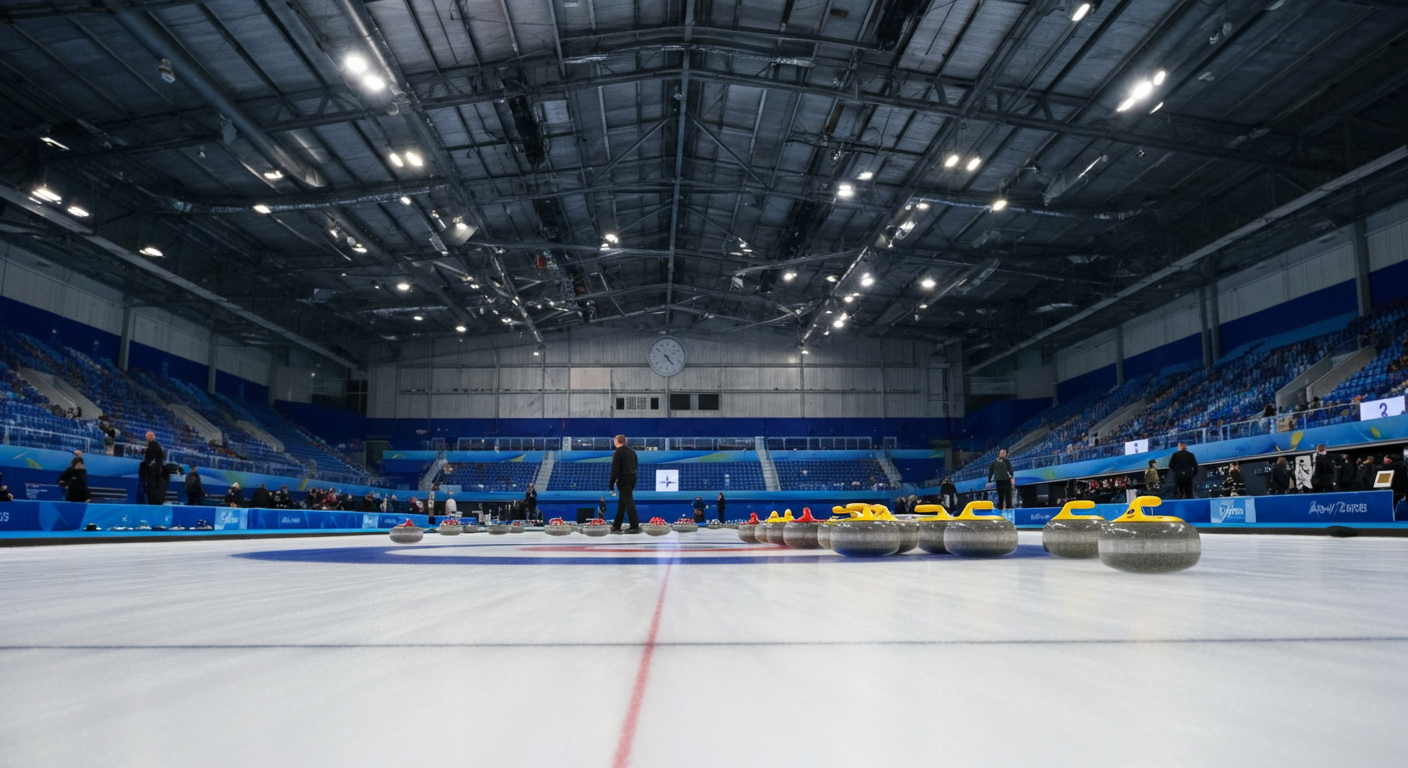
The North American Curling Monopoly: Why the 2026 Semifinal Collapse is a Structural Shift
The double elimination of Canada and the United States in the 2026 Olympic semifinals marks the definitive end of North American curling exceptionalism. This is not a “bad day on the ice”; it is a systemic failure to adapt to the globalization of technical precision. For decades, Canada and the U.S. relied on a massive volume of players to produce elite talent, but European programs—specifically Switzerland and Sweden—have industrialized the sport’s technical nuances, rendering the “Big Two” advantage obsolete.
### The End of an Era: Examining the North American Exit
Canada entered the semifinals as the top seed after a dominant round-robin performance, including a victory over the Americans. However, the unexpected loss to Sweden shattered the narrative of Canadian inevitability. Simultaneously, the U.S. women’s team, pursuing their first-ever Olympic medal, fell to Switzerland. This dual exit relegated the two heavyweights to a bronze medal match that feels less like a podium opportunity and more like a consolation for a fading empire.
### Tactical Failures: Where the Semifinals Were Won and Lost
The technical breakdown reveals a rigid adherence to “power curling” that failed under pressure. Canadian skip Rachel Homan cited “straighter” ice conditions as a primary obstacle. This admission is a tactical red flag. While Sweden and Switzerland adjusted their delivery and weight to account for the arena’s environmental variables, the North American teams continued to chase lines that weren’t there. The inability to pivot mid-game suggests a deficit in “ice reading” literacy compared to their European counterparts.
### Trend Radar Analysis: The Closing Gap in Global Curling
Data from the last two Olympic cycles shows a narrowing margin in “shot success percentage” between the North American giants and the rest of the world. The centralization of European curling programs—where national teams train together year-round—is outperforming the North American model of individual “super-teams” formed through domestic trials. The result is a parity where the U.S. fighting for its first medal is no longer a Cinderella story, but the new expected baseline.
### Psychological Pressure and the Weight of Olympic Expectations
Top-seeded teams face a unique psychological “freeze” when their primary strategy fails. Canada’s status as the tournament favorite created a rigid performance environment. When the ice didn’t behave like the club ice in Halifax or Minneapolis, the mental pivot didn’t happen. The European teams, playing with the freedom of the “challenger” role, exploited this hesitation by playing a high-guard, defensive game that forced the North Americans into high-risk shots they weren’t prepared to execute.
### Rebuilding the Program: Future Outlook
To reclaim dominance, national governing bodies must evolve. The current model of selecting teams via a one-week trial rewards “who is hot now” rather than “who is technically adaptable.” Future training must move away from standardized conditions and toward “variable ice simulation.”
Behind the Scenes:
The economic disparity in curling is shifting. While Canada has the most players, Swiss and Swedish programs have higher per-capita investment in sports science and pebble-physics analytics. They are treating curling like Formula 1—engineering the outcome rather than just playing the game.
Counter-Opinion:
Some argue that “ice conditions” are an equalizer that introduces luck. This is a fallacy. In elite sports, the inability to adapt to the environment is a skill deficit, not bad luck. The “straighter ice” excuse is a mask for a lack of technical versatility.
Bold Prediction:
Within the next six months, Curling Canada will announce a radical restructuring of its High-Performance program, likely moving toward a “National Squad” model similar to the UK or Switzerland, effectively ending the era of independent professional teams representing the country.
External Sources:
* The top-ranked Canadian women couldn’t overcome “straighter” ice
* U.S. women’s curling team falls to Switzerland in semifinal
* Winter Olympics 2026 Day 15 live updates
* U.S. competing for first-ever medal in women’s curling
* Canada’s Rachel Homan plays U.S. for curling bronze
Frequently Asked Questions
Why has Canada’s historic dominance in Olympic curling declined in recent years?
We have observed that international teams now benefit from year-round government funding and centralized training programs that mirror professional sports. While Canada historically relied on its deep talent pool, other nations have closed the gap by focusing intense resources on a few elite teams.
How has the rise of European and Asian programs impacted North American medal prospects?
We see countries like Sweden, Switzerland, and South Korea investing heavily in technical coaching and data analytics, which has eliminated the strategic advantage North America once held. This increased global parity means that even the top-ranked Canadian or U.S. teams no longer have a guaranteed path to the podium.
Does the Mixed Doubles format hinder performance in traditional four-player events?
We believe the expanded Olympic schedule creates significant physical and mental fatigue for athletes who attempt to compete in both disciplines. The specialized focus required for Mixed Doubles often draws elite talent away from traditional team practices, potentially diluting the preparation for the four-player game.
What are Canada and the U.S. doing to regain their competitive edge?
We are seeing a shift toward more rigorous national selection processes and increased financial support for high-performance “super-teams.” By adopting more centralized training models, North American organizations aim to match the consistency and professionalized preparation levels seen in dominant European programs.
Is the traditional club-based system in North America becoming obsolete?
We find that while the club system remains vital for grassroots growth, it often struggles to compete with the state-sponsored models used by international rivals. To stay relevant at the Olympics, we must find a way to bridge the gap between local club play and the elite, full-time professional environment required for gold medals.
Conclusion
We believe that the shifting landscape of international curling indicates that Canada’s era of absolute dominance is being challenged by a more competitive global field, including a surging U.S. program. While technical adjustments to ice conditions remain a factor, the narrow margins in recent medal rounds suggest that the gap between traditional powerhouses and the rest of the world has officially closed.
References
- AP News — Analysis of Canadian women’s performance against Sweden and ice conditions.
- The Star — Coverage of the bronze medal match between Team Homan and the United States.
- NBC Olympics — Live updates on medal counts and Day 15 highlights from the Winter Games.
- CBS Sports — Results and live updates for the final stages of the 2026 Winter Olympics.
- Yahoo Sports — News on U.S. gold medal records and upcoming women’s curling events.
Report Inaccuracy
We value accuracy. If you find any inaccurate information, please let us know.
