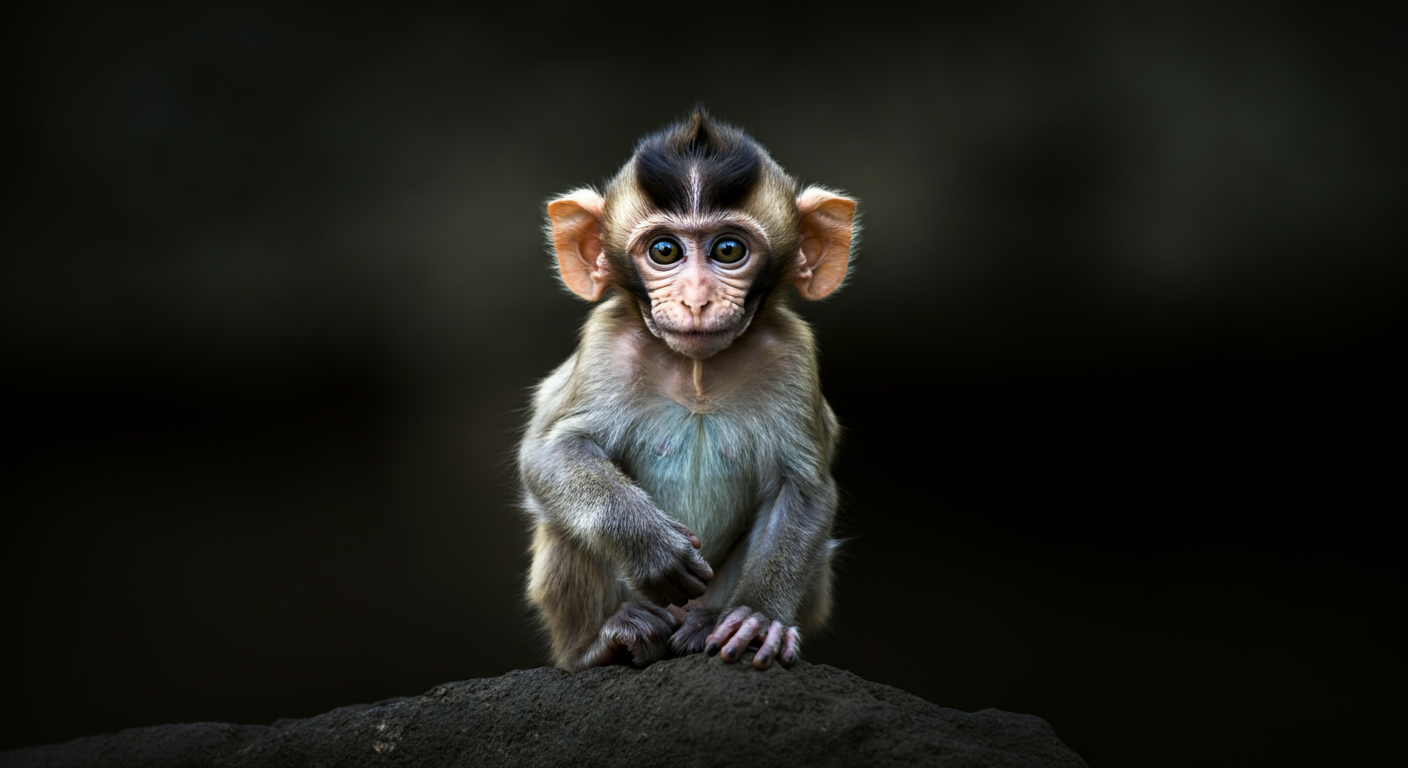
Punch the Monkey: How Algorithmic Loneliness Recycled a 1950s Trauma
The viral ascent of Punch, a seven-month-old macaque clinging to an IKEA plushie, is not a “cute” digital moment; it is a clinical demonstration of the “Loneliness Economy” capitalizing on primate trauma. While viewers perceive a heartwarming bond, they are witnessing a biological emergency. Punch’s reliance on a synthetic surrogate is a modern-day replication of Harry Harlow’s mid-century isolation studies, proving that the craving for “contact comfort” is a physiological mandate that overrides even the need for food. This phenomenon reveals a disturbing synthesis: social media algorithms have learned to weaponize the most primitive attachment triggers to drive engagement in an increasingly isolated human population.
Beyond the Viral Clip: The Psychological Appeal of Punch and His Plushie
The footage of Punch is a masterclass in involuntary empathy. When Punch is bullied by older macaques, as noted by The Write Hook, his immediate retreat to a plush toy activates human “alloparenting” instincts. We are biologically programmed to respond to the “baby schema”—large eyes, clumsy movements, and distress vocalizations. However, the real “hook” is the visual of the embrace. In a digital landscape defined by sterile interactions, the sight of a vulnerable creature seeking tactile solace provides a vicarious sensory experience for a lonely audience. Punch isn’t just a monkey; he is a mirror for a society experiencing its own crisis of physical disconnection.
The Harlow Legacy: Revisiting 70 Years of Research on “Contact Comfort”
Punch’s behavior validates the controversial 1950s experiments by Harry Harlow, which shattered the then-dominant belief that infants only bonded with mothers for food. Harlow’s rhesus monkeys chose a soft cloth “mother” over a wire one that provided milk, proving that tactile warmth is essential for neurological development. As The Independent highlights, Punch’s attachment to his IKEA companion is a survival strategy in the absence of a maternal troop. This confirms that the biological “software” of primates—including humans—has not evolved to handle the isolation of the modern world, whether that isolation is in a lab or a digital feed.
Evolutionary Mirrors: Why the Human Brain Is Wired for Primate Empathy
The intensity of the public’s reaction is driven by mirror neurons—cells that fire both when an individual acts and when they observe the same action performed by another. When Punch clutches his toy, the viewer’s brain simulates the sensation of seeking safety. This “anthropomorphic resonance” allows humans to project complex narratives of grief and resilience onto Punch. We don’t just see a macaque; we see a narrative of the “underdog” surviving social rejection. This cross-species empathy is an evolutionary relic designed to maintain group cohesion, now being redirected toward pixels on a screen.
Trend Radar Analysis: The Algorithmic Monetization of Primal Vulnerability
Platforms like TikTok and Instagram prioritize content that triggers high-arousal emotions—specifically “protective” empathy. The “Punch Phenomenon” represents a pivot in content strategy: moving from high-gloss perfection to “vulnerability porn.”
The Hidden Pattern: Algorithms identify “distress-relief” loops (Punch is bullied -> Punch finds plushie -> Audience feels relief) as high-retention gold. These clips are served to users who exhibit “loneliness markers” in their browsing data, creating a feedback loop where the user’s own isolation is soothed by a digital surrogate of a biological surrogate.
Behind the Scenes: The Social Dimension
The global obsession with Punch coincides with a documented “loneliness epidemic” in the West. There is a direct economic correlation between the decline in physical human-to-human touch and the rise in consumption of “comfort” content. Punch is the mascot of a society that has outsourced its emotional regulation to screens and synthetic objects.
Counter-Opinion: The Anthropomorphic Trap
While the Harlow connection is scientifically sound, there is a risk of over-interpreting Punch’s “emotions.” Critics argue that by framing Punch through a purely human psychological lens, we ignore the ecological reality: a macaque raised with a plushie instead of a troop is a behavioral casualty. We are celebrating a coping mechanism for a tragedy, essentially romanticizing a developmental deficit because it makes for good “content.”
Bold Prediction
Within the next six months, expect a surge in “Surrogate Content”—artificial intelligence and robotic “comfort” pets marketed specifically to Gen Z and elderly demographics, using the exact behavioral cues seen in the Punch videos. The monetization of “Contact Comfort” will move from viral clips to a multi-billion dollar “Tactile Tech” industry, as companies realize that the human brain cannot distinguish between a biological bond and a well-engineered synthetic substitute.
Sources:
- The Independent: The cruel experiment that explains Punch the Monkey’s attachment
- The Write Hook: Why do we feel so strongly about Punch?
- Google News: Viral monkey and attachment theory
- Tolerance.ca: Research and emotion in the Punch phenomenon
Frequently Asked Questions
How does the “Punch Phenomenon” specifically trigger anxious attachment styles?
We find that the instantaneous nature of digital alerts acts as a psychological “punch,” creating a cycle of hyper-vigilance. For those with anxious attachment, the lack of an immediate response to a message can feel like a direct rejection, intensifying the need for constant reassurance.
Can we use digital boundaries to move toward a more secure attachment style?
Yes, we recommend establishing “digital sunset” periods and turning off non-essential notifications to reduce the constant state of reactivity. By controlling how we receive information, we create the necessary space to process emotions without the pressure of immediate digital interaction.
Why do avoidant individuals often feel overwhelmed by this phenomenon?
We observe that the 24/7 accessibility of digital communication feels like an intrusion on the personal space avoidant individuals require. This constant connectivity can lead to “digital withdrawal,” where the person shuts down or ghosts others to regain a sense of autonomy.
Does the “Punch Phenomenon” impact how we handle conflict in modern relationships?
We’ve noticed that the lack of non-verbal cues in digital “punches” often leads to misinterpretation and escalated conflict. To counter this, we advise moving sensitive discussions to voice or video calls where tone and body language can provide the context needed for secure attachment.
Conclusion
We believe that the “Punch Phenomenon” serves as a powerful reminder of how primal attachment theories manifest within our modern digital landscape. By analyzing these emotional connections, we can gain deeper insights into how social media influences human behavior and psychological development.
References
- The Independent — An exploration of the Harlow experiments and their relation to Punch the Monkey’s attachment.
- The Write Hook — An analysis of the strong emotional reactions surrounding the Punch phenomenon.
- Google News — Current top stories and trending news updates.
- Tolerance.ca — A look at how scientists balance research tensions and professional responsibilities.
- Google News Picks — Personalized news selections and regional updates.
Report Inaccuracy
We value accuracy. If you find any inaccurate information, please let us know.