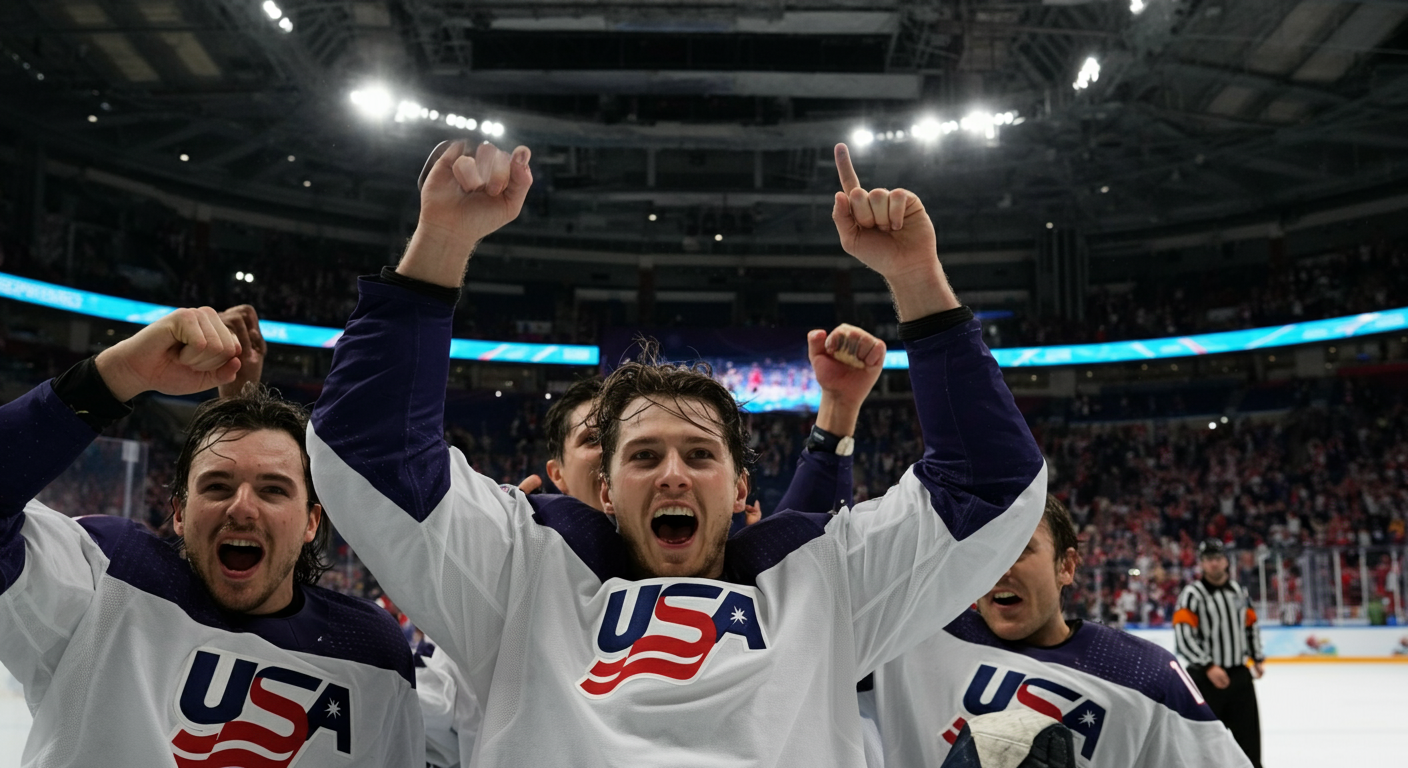
The 2026 gold medal in Milan is not a “Miracle” sequel; it is the final stage of a 20-year industrial overhaul. While the 1980 victory was a generational anomaly, this 2-1 overtime win against Canada signals the official end of Canadian hegemony in international ice hockey. The United States has successfully transitioned from a nation that produces “scrappy overachievers” to one that operates a superior talent assembly line. By leveraging a centralized development model that prioritizes elite skating mechanics over traditional North American “heavy” hockey, Team USA has effectively cracked the code for neutralizing Canada’s individual star power through systemic speed.
The Evolution of US Development Pipelines
The structural shift facilitating this roster began with the maturation of the National Team Development Program (NTDP) and its synergy with the NCAA. Unlike the Canadian model, which often distributes top-tier talent across various major junior leagues with disparate coaching philosophies, the US has centralized its elite prospects. This creates a cohesive tactical identity long before players reach the NHL. The Milan roster was the first to fully integrate three generations of NTDP graduates who have played together since age 16. This “club team” familiarity at the international level allowed the US to execute complex zone exits that Canada’s more “ad-hoc” superstar roster struggled to disrupt. The NCAA has also evolved into a high-performance laboratory, focusing on aerobic capacity and edge work, producing players who are physically prepared for the relentless pace of Olympic-sized ice.
Tactical Superiority: Neutralizing Canada’s Offense
Despite reports that Canada was the “better” team statistically in the final, the US victory was a masterclass in low-event defensive containment. Analyzing the game flow reveals that the US intentionally conceded the perimeter, forcing Canada into low-danger shot attempts. This strategy maximized the efficiency of Connor Hellebuyck, who thrived on predictable shot lanes. The US defensive scheme utilized a “1-2-2” mid-ice trap that specifically targeted Canada’s transition speed. By clogging the neutral zone and forcing dump-ins, the US neutralized Canada’s creative playmakers, turning a high-skill matchup into a game of puck retrieval—a discipline where the US skating metrics proved superior. This wasn’t a “logic-defying” win; it was a tactical strangulation that traded style points for high-percentage defensive positioning.
Trend Radar Analysis: Speed Over Physicality
The Milan final serves as the definitive data point for a broader transformation: the death of “heavy” hockey on the international stage. The US team’s skating metrics—specifically their “controlled zone entry” percentage—outpaced every other nation in the tournament. In previous decades, Canada could physically intimidate US rosters. In 2026, that physicality became a liability. The US roster was built on “separation speed”—the ability to create two feet of space in the neutral zone through explosive first steps. This shift mirrors the NHL’s own evolution, but the US has been more aggressive in selecting for this trait. The result is a team that can maintain a high-press forecheck for 60+ minutes without the fatigue-driven defensive lapses that plagued US teams in 2010 and 2014.
Future Projections: A New Hierarchy in Global Hockey
This victory creates a permanent shift in the global hockey hierarchy. For the first time, the US enters the next four-year cycle as the “team to beat,” a psychological burden previously reserved for Canada. We expect this to accelerate NHL participation in future Olympics, as the commercial value of a US-Canada rivalry at the highest level has now reached its zenith. Furthermore, the US victory will likely trigger a “developmental panic” in Hockey Canada, potentially leading to a centralized program that mimics the US NTDP. The US is no longer chasing the gold standard; they have become it.
Behind the Scenes: The Social Dimension
Beyond the tactics, the emotional resonance of this win cannot be ignored. The team’s dedication to the memory of Johnny Gaudreau provided a psychological anchor that manifested in their disciplined, selfless play. Economically, this gold medal is a windfall for USA Hockey. With the 2028 Los Angeles Olympics on the horizon, the momentum from this win will likely drive a surge in youth registration in non-traditional markets, further expanding the talent pool and ensuring that the 2026 roster was not a peak, but a baseline.
Counter-Opinion: Was it a Goaltending Heist?
A critical look at the shot quality data suggests that Canada’s “dominance” was largely superficial. While Canada led in puck possession time, the US led in “inner-slot” scoring chances. The narrative that the US “stole” the game ignores the reality that modern hockey is won through high-efficiency counter-attacking. Canada’s failure to adapt to the US’s transition-focused defense is a coaching failure, not a stroke of bad luck. Relying on a goaltender like Hellebuyck is a feature of the US system, not a bug.
Bold Prediction
Within the next six months, expect at least three major NHL franchises to overhaul their scouting departments to prioritize “skating-first” prospects from the US developmental system over traditional Canadian junior leagues. The “Milan Model” will become the blueprint for roster construction across the league, leading to a record-breaking number of US-born players being selected in the first round of the next two NHL drafts.
Olympics news, live updates: Closing Ceremony ends final day of …
How Team USA wrote a new story with logic-defying gold-medal …
U.S. beat Canada to win the gold in Olympic men’s ice hockey – CNBC
USA-Canada gold medal game: Top photos from an Olympic instant …
Team USA wins a historic gold and honors a fallen teammate – CNN
Frequently Asked Questions
What tactical shift allowed the US to overcome the Soviet “Red Machine”?
We believe the key was the implementation of a hybrid system that combined North American physicality with European puck possession. By emphasizing speed and creative movement over traditional dump-and-chase tactics, we were able to disrupt the Soviets’ fluid passing lanes and maintain offensive pressure.
Why was the team’s conditioning considered the “X-factor” in their gold medal run?
We focused on elite aerobic capacity to ensure the players could maintain a high tempo throughout the entire sixty minutes. This superior fitness allowed us to outwork opponents in the third period, which is where the most decisive goals and defensive stands were executed.
How did the use of short, high-intensity shifts impact the game strategy?
We utilized disciplined 45-second shifts to keep legs fresh and maintain a relentless forecheck that pressured opposing defensemen constantly. This strategy prevented the opposition from establishing a rhythm and forced critical turnovers in the neutral zone during the transition phase.
What role did positional fluidity play in the offensive zone?
We moved away from static positions, encouraging players to cycle and “weave” to create confusion for the opposing defense. This fluid movement opened up unexpected passing lanes and allowed our defensemen to jump into the play as secondary scoring threats without sacrificing defensive integrity.
Conclusion
We believe Team USA’s gold medal victory was a masterclass in strategic execution and emotional resilience, proving that tactical discipline can overcome even the toughest rivals. By blending logic-defying goaltending with a deep commitment to honoring their late teammate, the team solidified a historic legacy that will inspire future generations of American hockey players.
References
- Olympics news, live updates: Closing Ceremony ends final day of … — Live coverage of the final day of the games and Team USA’s victory over Canada.
- How Team USA wrote a new story with logic-defying gold-medal … — An in-depth look at the goaltending and strategy behind the gold-medal win.
- U.S. beat Canada to win the gold in Olympic men’s ice hockey – CNBC — A report on the final game results and the U.S. team’s achievement.
- USA-Canada gold medal game: Top photos from an Olympic instant … — Visual highlights and key moments from the championship game in Italy.
- Team USA wins a historic gold and honors a fallen teammate – CNN — Coverage of the team’s emotional victory and their tribute to Johnny Gaudreau.
Report Inaccuracy
We value accuracy. If you find any inaccurate information, please let us know.