The Great Gerrymander of 2026: Redistricting Battles Heat Up in Virginia and Missouri
 aeisam644@gmail.com
By: NewsSphere Editorial Team
Published: May 10, 2026
As the 2026 U.S. Midterm Elections approach, a high-stakes legal and political war is being waged not in the streets, but in the courtrooms. Redistricting controversies have taken center stage, specifically in Virginia and Missouri, as both parties scramble to redraw congressional maps that could decide the balance of power in Washington D.C.
Virginia: A Major Blow to Democratic Maps
In a landmark 4-3 decision on Friday, May 8, 2026, the Virginia Supreme Court struck down a new congressional map that would have likely handed Democrats four additional seats in the U.S. House of Representatives.
- The Dispute: The court ruled that the state’s General Assembly failed to follow the proper constitutional procedure when implementing the map.
- The Ruling: Justices found that the proposed constitutional amendment was passed after voters had already begun casting ballots during the 2025 general election, rendering the subsequent referendum “null and void”.
- The Impact: This decision is a significant win for Republicans, as Virginia will now revert to preexisting maps for the November midterms, protecting several GOP-held districts.
Missouri and the “Voluntary Redistricting” Surge
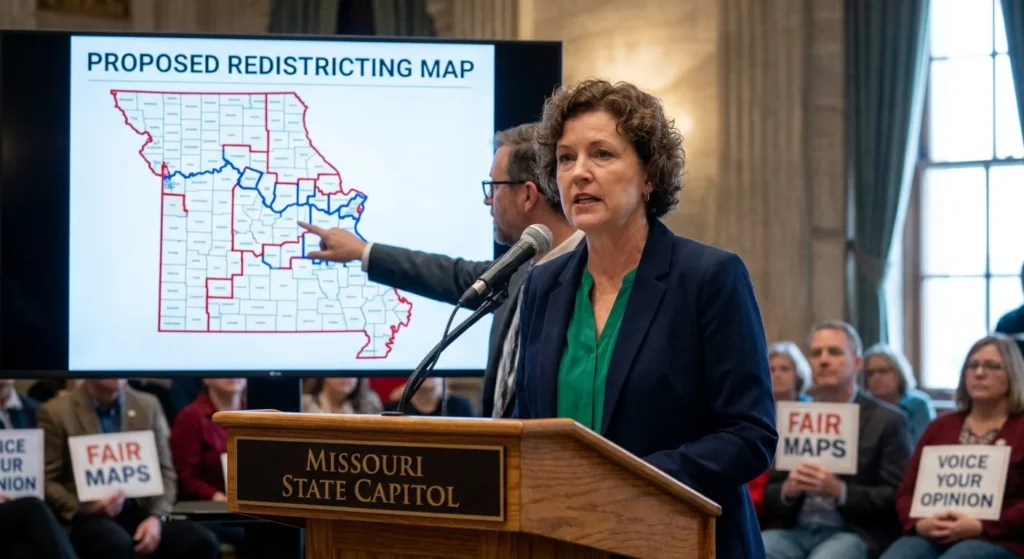
While Virginia’s battle played out in court, Missouri is among the states that recently enacted new congressional maps through legislative action.
- Gerrymandering Accusations: Critics argue that Missouri’s new map, signed into law by Governor Mike Kehoe, is designed to “gerrymander” Democratic influence out of specific districts.
- National Context: Missouri joins Texas and North Carolina in a Republican-led effort that could eliminate up to seven Democratic districts nationwide ahead of the 2026 elections.
The Broader Strategic War: 2026 Midterm Implications
Redistricting in 2026 has become a “tit-for-tat” battle. While Republican-led states have moved to solidify their hold, Democratic-led states like California have retaliated with maps that could flip up to five Republican-held seats.
Key Takeaways for NewsSphere Readers:
- Purcell Principle: Many courts are now hesitant to change maps so close to an election to avoid voter confusion, a doctrine known as the “Purcell Principle”.
- The House Majority: With a slim 217-212 majority for Republicans as of May 2026, every single seat gained or lost through redistricting is critical.
- Voter Impact: These “invisible lines” often determine who represents you long before a single ballot is cast.
You may also like